
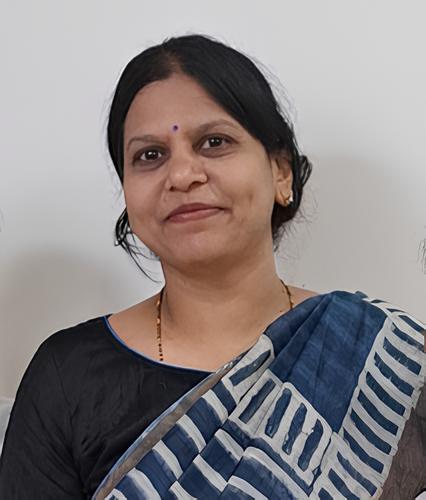
Rashmi Prashant Rajashekhar
Dr. D. Y. Patil Medical College, Hospital & Research Centre, India, IndiaPresentation Title:
Predicting the outcome of tympanoplasty using middle ear risk index in patients with chronic otitis media
Abstract
Chronic Otitis Media (COM) implies a permanent abnormality of the pars tensa or flaccid. WHO has estimated that 65-330 million people worldwide are affected by COM, of whom 50% suffer from hearing impairment and approximately 28000 deaths per annum are attributable to the complications of chronic otitis media. Tympanoplasty is the surgery of choice for COM. In the past, most workers described success in terms of hearing improvement, while results today are reported in relation to control of pathology, anatomic status, hearing improvement, and postoperative complications. A more practical tympanoplasty reporting protocol, developed by Austin Kartush, generates a numeric indicator of the severity of the middle ear disease. MERI 0 – Normal; MERI 1 to 3– Mild disease; MERI 4 to 6– Moderate disease and MERI 7 to 12– Severe disease. MERI is used to predict the success rate of middle ear reconstruction procedures. For accurate prediction of the surgical results of middle ear ossiculoplasty the status of middle ear and its ossicles must be ascertained. Objective: Predicting the outcome of tympanoplasty using middle ear risk index in patients with chronic otitis media. Methodology: Over 1 year, 75 patients between 15yrs and 60 years diagnosed with mucosal and squamosal chronic otitis media were included in the study. They were classified into mild, moderate and severe disease depending on the MERI score. Observation and Results: Mucosal COM accounts for 62%, while 96% of squamosal are persistently wet ear as compared to 34% of mucosal COM. According to MERI score, 57% squamosal COM showed severe disease as compared to 5% of mucosal COM. While mild disease in mucosal COM was 7% as compared to 72% of squamosal COM. Conclusion: MERI score guided in assessing the severity of the disease to priorly decide on to type of surgery needed to be performed.
Biography
Rashmi Prashant Rajashekhar completed her MBBS and MS in otorhinolaryngology from K.L.E society’s JNMC, Belagavi. Since 2011, she has been affiliated with Dr. D. Y. Patil Medical College, Hospital and Research Centre, Dr. D. Y. Patil Vidyapeeth, Pune. She has been an active member of the medical education community since 2021, serving as a resource person for numerous medical education workshops for faculty and as a reviewer for several national journals. She has more than 50 publications in indexed national and international journals. She has presented papers at prestigious international conferences, including the 2nd International Conference in Otorhinolaryngology (Paris, webinar) and the 3rd International Conference in Otorhinolaryngology (Dubai, physical). She was also a guest speaker at the Wellness International Conference in Lucknow, India. Representing Dr. D. Y. Patil Vidyapeeth, she has interacted with faculty from six universities in the UK, including Cambridge University, University of Bath, University of Bristol, University of East Anglia, and Brunel University. She was awarded Best Temporal Bone Dissection in 2015 and her biography is included in Asia Pacific who is who. She has chaired and judged sessions at national and international conferences and co-authored a chapter on Maxillectomy in the Atlas of Operative Otorhinolaryngology and Head and Neck Surgery. As a researcher, she has completed two projects as principal investigator, guided four undergraduate students on government projects funded by Icmr, three students on DPU-funded projects, and supervised eight postgraduate dissertations. She is currently pursuing her PhD since 2022, and the presented research study is part of her doctoral work.

Organization Location
1309 Coffeen Avenue, STE 1200, Sheridan, Wyoming 82801, USA
General Enquiry
finance@scientexconferences.com
Finance Enquiry
finance@scientexconferences.com
Call us at
USA : +1 (716) 4932 313