

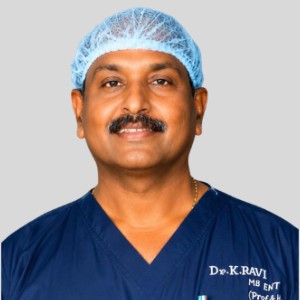
Speaker
Konide Ravi
- Government Siddhartha Medical College
- India
Presentation
Paralysis to recovery: Outcomes of surgical decompression and multimodal management in facial nerve palsy
- April 12 -13, 2027
- Dubai, UAE
Biography
Dr. Konide Ravi completed his MBBS (1985–1990) and MS in ENT (1992–1995) from Guntur Medical College, Guntur. He began his academic career as an Assistant Professor at Guntur Medical College in 1998, later serving as an Associate Professor at Government Medical College, Ongole (2015–2020). He is currently serving as Professor and Head of the Department of ENT at Government Siddhartha Medical College, Vijayawada, Andhra Pradesh. With clinical expertise spanning Skull Base Surgery, Head and Neck, Rhinoplasty, and Otology, Dr. Ravi has authored numerous articles on thyroplasties, rhinoplasties, CSF rhinorrhea, mastoid cavity obliteration, frontal sinus approaches, and facial nerve reconstruction and decompression. He has won multiple awards for competitive papers at state conferences, presented extensive research at national conferences, and served as an esteemed panelist on thyroid tumors, pediatric cholesteatoma, allergy, and CSF rhinorrhea. Beyond medicine, he is an accomplished tennis player with competitive victories in ITF tournaments.
Abstract
Facial nerve paralysis causes severe functional, aesthetic, and psychological impacts, commonly stemming from chronic otitis media (COM), temporal bone trauma, and malignant otitis externa (MOE). This study evaluated the etiology, clinical features, and functional recovery outcomes following surgical decompression combined with targeted medical therapy in 15 patients presenting with moderate to severe facial nerve paralysis unresponsive to standard conservative management.
The patient cohort was predominantly male (80%) and aged 41–50 years, with symptoms including hearing loss (80%), otalgia (66.6%), otorrhea (66.6%), and otorrhagia (33.3%), and etiologies equally split among COM, temporal bone trauma, and MOE (33.3% each). Following tailored surgical decompression—such as mastoidectomy with nerve decompression—and medical therapy, House-Brackmann (HB) scale evaluations at 6 months revealed complete recovery (HB Grade I–II) in 60.0% of patients, partial recovery in 26.6%, and poor recovery in 13.3%.
COM patients demonstrated the best outcomes with 100% complete recovery, followed by post-traumatic cases undergoing timely decompression, whereas MOE cases showed a guarded prognosis due to aggressive infection and tissue necrosis. Surgical decompression combined with medical therapy yields favorable functional outcomes in refractory facial nerve palsy, emphasizing that early diagnosis and timely intervention are crucial for maximizing recovery.
